What Are CSS Frameworks and Why Should You Use Them?
CSS frameworks are pre-prepared libraries that are meant to be used as a base for your website’s styles. They provide a structured, standardized way to manage your CSS code, making it easier for developers to create consistent, attractive designs. Some popular frameworks include Bootstrap, Foundation, and Bulma. By using these frameworks, you can significantly speed up your development process, as they come with a wide array of ready-to-use components like grids, buttons, forms, and navigation menus.
Utilizing a CSS framework can enhance your workflow in several ways:
- Consistency: Frameworks help ensure that your styles are uniform across different pages, making for a cohesive user experience.
- Responsive Design: Most modern frameworks are designed to be mobile-first, enabling your site to look great on any device.
- Cross-browser Compatibility: CSS frameworks take care of many compatibility issues that can arise when your styles are rendered in different browsers.
The Top 5 CSS Frameworks to Speed Up Your Web Development
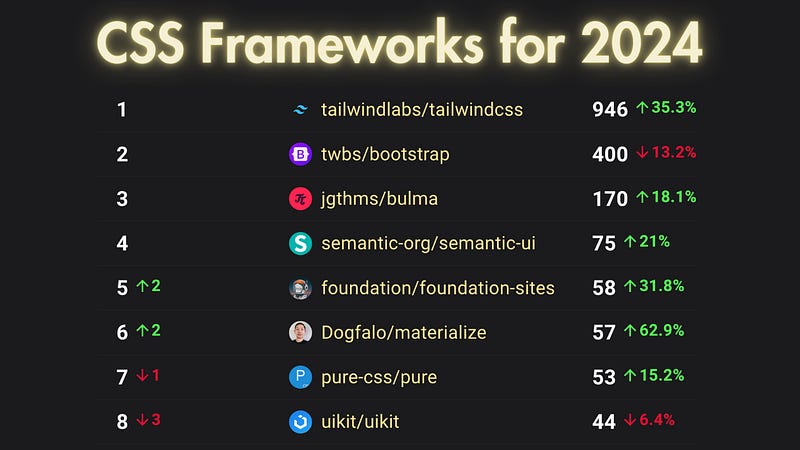
When it comes to web development, utilizing a CSS framework can drastically enhance your productivity and streamline your workflow. In this article, we will explore the top 5 CSS frameworks that can help you speed up your web development process. These frameworks not only provide reusable code but also offer grid systems and responsive design elements, allowing you to focus on creating unique and compelling layouts without getting bogged down in the nitty-gritty of CSS.
Here are the top 5 CSS frameworks you should consider adopting:
- Bootstrap - The most popular framework with a vast community and extensive documentation.
- Tailwind CSS - A utility-first CSS framework that allows for highly customizable designs.
- Bulma - A modern CSS framework based on Flexbox, making responsive design a breeze.
- Foundation - Known for its flexible grid system and mobile-first approach.
- Semantic UI - Offers a high-level, straightforward vocabulary that can help you create beautiful and responsive layouts.
Choosing the right framework depends on your project requirements, but adopting any of these CSS frameworks will undoubtedly lead to a more efficient development process.
How CSS Frameworks Enhance Responsiveness and Design Consistency
CSS frameworks play a pivotal role in enhancing the responsiveness of web designs by providing a pre-defined structure of grid systems and responsive utilities. By using these frameworks, developers can implement a well-organized layout that adapts seamlessly to various screen sizes. For instance, frameworks like Bootstrap and Foundation offer a grid system that allows for quick adjustments, ensuring that images, text, and other elements reflow appropriately on devices ranging from desktops to smartphones. This ability to create mobile-first designs without starting from scratch saves time and improves productivity.
Moreover, CSS frameworks contribute to design consistency across web applications. When a framework is used, it incorporates a set of styling conventions and reusable components, such as buttons, forms, and navigation menus. This uniformity not only enhances the overall aesthetic but also offers a cohesive user experience. By having a consistent design language, users can navigate applications with greater ease and confidence, which ultimately leads to improved interaction and satisfaction with the site. Overall, leveraging a CSS framework ensures that responsiveness and design consistency are maintained throughout the development process.